agent-flight-recorder
A flight recorder for AI agents – run a task N times in isolated E2B sandboxes, record every trace, measure pass rate, flakiness and cost per success, and diff the trajectories of two runs.
- Role
- Author & Maintainer
- Year
- 2026
Problem
Agents are non-deterministic – the same prompt can take a different execution path every run, so a demo that works once tells you nothing about reliability or cost in production.
Solution
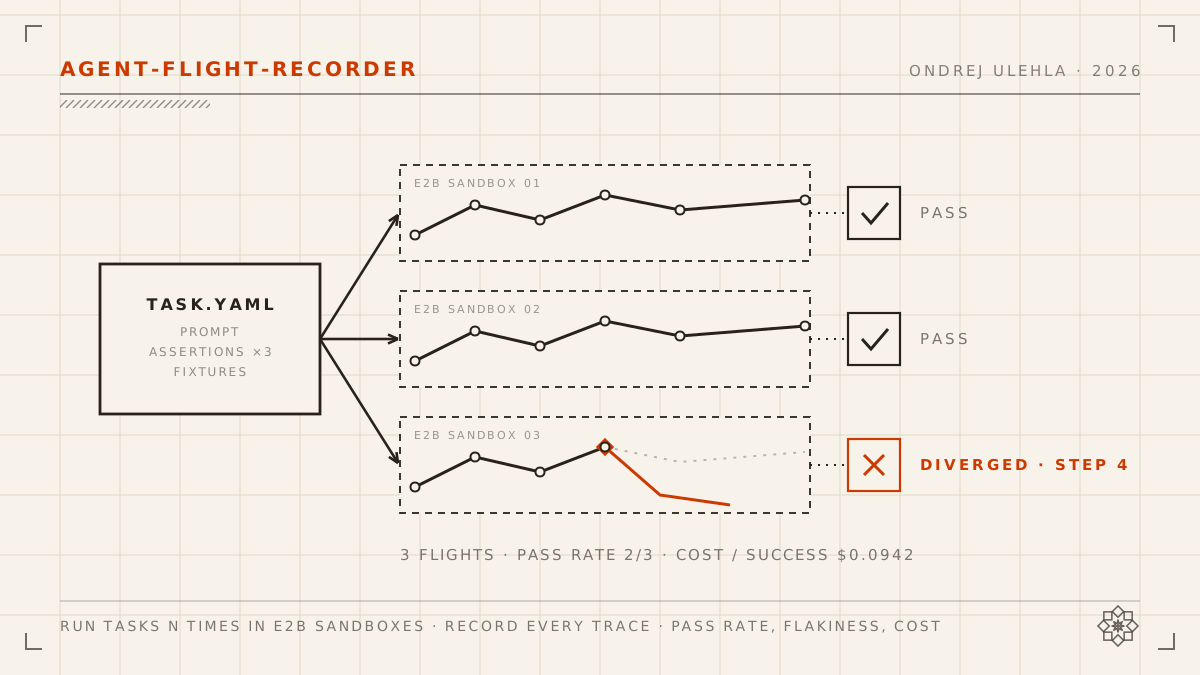
A recorder that executes each run in a fresh E2B micro-VM, captures the full trace to JSONL, evaluates assertions, and reports pass rate, flakiness and cost per success – plus an aligned diff showing the exact step where two runs diverged.
Outcome
One command turns "it worked on my machine, once" into measured reliability: N recorded flights, a statistics table, and the first divergent tool call between any two of them.
Context
Every aviation incident investigation starts with the flight recorder: a full, timestamped record of what actually happened. AI agents crash too – they just do it quietly, on the third retry, in someone’s CI. And because agents are non-deterministic, the run you watched succeed says very little about the runs you didn’t watch.
I built this after readme-ci and mcp-sandbox, which both treat E2B sandboxes as disposable clean rooms. The next question was obvious: if a run is fully isolated, why not record all of it – and run it many times?
Problem
Three things are nearly impossible to answer about an agent from ad-hoc runs:
- Reliability – does the task pass 10/10 times, or 6/10? A single success can’t tell you.
- Cost of success – average cost per run is misleading when some runs fail; what you pay for is a passing one.
- Where runs diverge – two runs of the same prompt take different paths. Which tool call was the fork in the road?
Solution
A task is a YAML file: a prompt, assertions that define success, and optional fixtures (files and setup commands planted in the workspace first). The runner then:
- boots a fresh E2B sandbox per run – no state leaks between flights
- executes the task with Claude Code in headless mode
(
claude -p --output-format stream-json) - parses every streamed message – assistant turns, tool calls, tool results,
rate-limit events – into trace events appended to
trace.jsonl - evaluates assertions inside the sandbox (file checks, arbitrary commands) and against the final answer
- aggregates N parallel runs into a table: pass rate, duration ±σ, tool calls, and cost per success
The part I care most about is flightrec diff: it aligns two traces and marks
each step = (matched), ≈ (same action, cosmetic differences), or -/+
(only in one run) – so when a batch has both passing and failing runs, the
report shows the exact tool call where the failing one left the happy path.
flightrec compare -m sonnet -m haiku runs the same task under two models and
answers the reliability-vs-cost question with numbers instead of vibes.
Outcome
- A working demo task plants two bugs in a small Python module and asks the agent to make the tests pass – with a checksum assertion so it can’t “fix” the tests instead; three parallel runs pass with cost per success measured to the cent
- Rate-limit events are recorded per run, so a slow batch is distinguishable from a throttled one
- The trace-parsing core is pure and fully unit-tested; sandbox I/O is isolated in one module, so the suite runs offline
What I learned
Trajectory alignment is the interesting algorithmic bit: raw traces differ in
harmless ways (timestamps, generated file content), so the diff has to score
semantic similarity of tool calls rather than string equality – close enough
to pair ≈ steps, strict enough that a genuinely different edit shows up as a
fork. Getting that threshold right is what turns a wall of JSONL into the one
line you actually need: “here is where the two flights parted.”
The thinking behind the tool – why pass rate, flakiness and cost per success are the numbers that matter, and why isolation is what keeps them honest – is written up in Measuring agents like flights.